

Hip Pain From Sitting Too Long—Why It Happens and How to Fix It
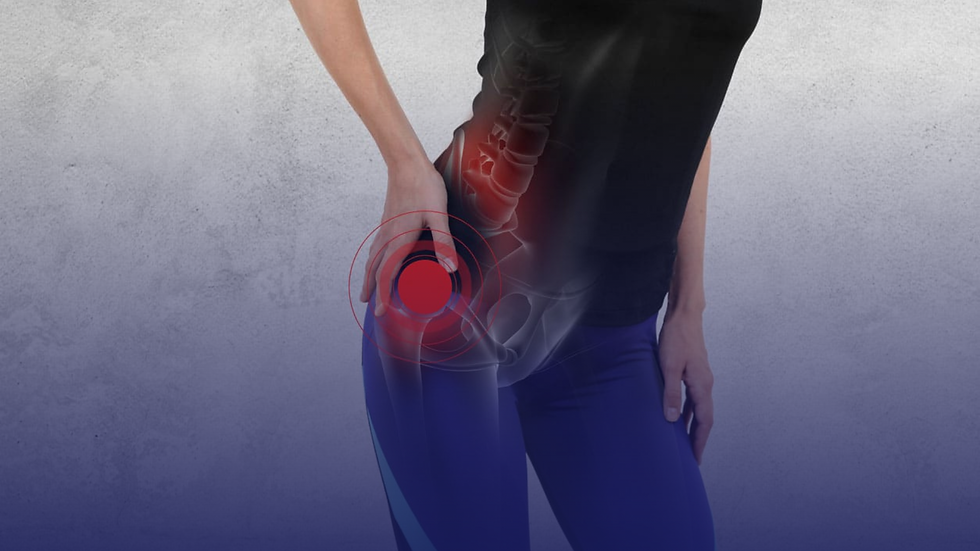
If you feel tightness or discomfort in your hips after sitting for long periods, you’re not alone. Many patients experience hip pain or stiffness that worsens after desk work, long drives, or extended screen time. What may feel like a minor annoyance can gradually develop into persistent discomfort if not addressed properly.
One of the main causes of this issue is tight hip flexor muscles. These muscles sit at the front of your hips and are responsible for lifting your knees and bending at the waist. When you sit for extended periods, your hip flexors remain in a shortened position. Over time, they become tight and less flexible, pulling the pelvis forward and placing strain on the lower back and hips.
At the same time, the glute muscles—which are responsible for hip stability and power—become underactive. When the glutes are not functioning properly, other muscles, including those in the lower back and hips, compensate. This imbalance can lead to discomfort, reduced mobility, and inefficient movement patterns.
Many patients notice symptoms such as:
Stiffness when standing up after sitting
Discomfort in the front of the hips or lower back
Reduced range of motion when walking or exercising
A feeling of “tightness” that doesn’t fully go away
Over time, this combination of tightness and weakness can affect posture and increase the risk of other issues, including lower back pain or knee strain.
The good news is that hip pain from prolonged sitting is highly manageable with the right approach. The goal is to restore balance between mobility and strength. This includes:
Stretching the hip flexors to reduce tightness
Activating and strengthening the glutes
Incorporating regular movement breaks throughout the day
Improving sitting posture and workstation setup
Even small changes—like standing up every 30–60 minutes or doing quick mobility exercises—can make a noticeable difference. Consistency is key. Rather than relying on occasional stretching, building daily movement habits helps prevent the issue from returning.
At Peakform Wellness, we assess how your posture, movement patterns, and muscle activation contribute to hip discomfort. Because hip pain often connects to the lower back and knees, a full-body approach ensures better, longer-lasting results. A personalized plan helps restore proper movement, reduce strain, and improve overall comfort.
Hip pain from sitting is common—but it’s not something you have to accept as normal. With the right guidance, your body can regain flexibility, strength, and ease of movement.


Comments